Rust, What a Solo With 14,782 Hours Actually Does on Official Servers
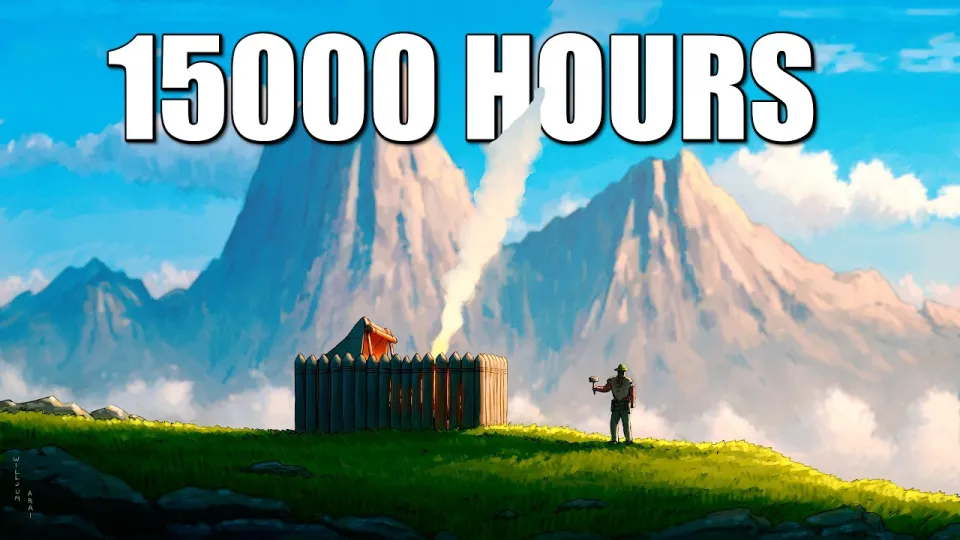
Video: How a solo with 14,782 Hours plays official rust...
Want articles like this for your own video to promote it on YouTube and Google? Order them through the Telegram bot @sat_sit_bot. Articles with your video embedded are written and posted by the bot itself — on popular topical sites (no ads). Try it free: 50 articles on us.
· based on the channel Willjum
Key takeaways
- Willjum's account shows 14,782 hours in Rust, roughly 1,180 hours per year across 12.5 years of play.
- The run is a solo wipe on an official vanilla server, not a modded or low-pop environment.
- The base build in the video comes from creator Luca Builds, credited in the video description.
- Core habits shown: early farming discipline, cheap kits, mannequin decoys in windows, and avoiding unnecessary fights.
- The video was published on 7 June 2026 on the Willjum channel.
Rust rewards time served more than raw aim, and a solo with 14,782 hours on an official server shows exactly what that looks like: quiet early farming, cheap and replaceable kits, a base that is boring on purpose, and fights taken only when the odds are already tilted. The clip comes from Willjum's channel and follows one solo wipe on official vanilla settings, where nothing is boosted and every loss is paid for in real farming time. Viewers who want the grooming sponsor offer can grab 15% off plus free shipping at Manscaped with the code shown in the video.
What 14,782 hours of Rust actually buys you
Fourteen thousand seven hundred eighty-two hours is the headline number, and it is worth putting in perspective: spread across roughly 12.5 years since Rust first appeared in early access, that is about 1,180 hours a year, close to what a part-time job demands. The hours do not translate into flashy aim so much as into decisions made automatically — where to put a door, when to break off a farm run, which fights are worth the kit.
On official vanilla servers the practical consequences of that experience are concrete:
- Base location is chosen for traffic flow, not scenery — near a road or monument with an escape route, but off the main path.
- Loot is spread across small stashes and secondary bases so one raid does not end the wipe.
- The first hours are spent on tools, furnaces and a workbench rather than on contests over a single crate.
- Every kit is cheap enough to lose without changing the plan for the day.
The result is a wipe that looks calm from the outside and is actually a long chain of small risk calculations.
Base design and the candle-hat problem
A solo base on official Rust has one job: survive the first two nights and stay uninteresting afterward. The build featured in the video was made by the creator Luca Builds, credited in the description, and it follows the standard solo logic — compact footprint, airlock, and enough honeycomb that a casual raider picks a different target. Small touches matter more than size: a mannequin placed in a window draws fire and attention away from the real entry point, a trick that shows up in the run and gets noticed by viewers.
One running joke in the video is a candle hat that is supposedly there to light up the build at night and is then never used again. It is a fair summary of solo priorities: lighting is cosmetic, doors and upkeep are not. On vanilla rates, stone and metal come slowly, so the upgrade order should be core loot room first, airlock second, everything else last.
Scrap discipline and the myth of the peaceful farmer
Willjum's commentary leans on not spending scrap on weapons, and the audience has heard that line before — the joke being that the nail gun count keeps climbing anyway. The underlying rule is still sound for solo play: scrap goes to the workbench, blueprints and a tier-two push before it goes to guns you will lose in the next ten minutes. A nail gun, a crossbow and a bone knife cover most early encounters at almost no cost.
There is also the persona question. Long-time viewers push back on the "simple peaceful farmer" framing because the same player will happily jump a duo when the angle is right. That is not a contradiction — it is the actual solo strategy. Farming quietly builds the stockpile; picking fights only when numbers and position favor you is how the stockpile survives. Players who copy the farming but not the fight selection usually lose their base on day two.
Typical questions from viewers of the run
Viewers watching an official-server solo tend to raise the same doubts, and they are worth answering directly, because they shape how useful the footage is.
- Is this vanilla or modded? The run is presented as official Rust, meaning no gather multipliers, no boosted loot tables and normal raid costs.
- Does experience replace aim? Partly. Game sense — audio, map flow, knowing when a fight is already lost — carries more weight than flick shots in solo play.
- How long does a wipe like this take? A full progression from bow to tier two and a stable base is a multi-day project, not a single session.
- Why so few fights? Every fight costs a kit and reveals a location. On official rates, a lost kit can mean an hour of farming.
A recurring note in the comments is that many people watch Rust for hundreds of hours without ever installing it, drawn by exactly this slower, narrative style of play. Others describe jumping into a high-population vanilla server, getting set up, and then dying to a naked with a bone knife — the same lesson the video teaches from the other side.
Why official vanilla hits differently
Official servers remove every safety net that modded and low-population servers provide. Population spikes on wipe day, monuments are contested, and a single bad decision can cost a full day of progress. That is also why the format works as entertainment: the stakes are legible. When a player with thousands of hours chooses to avoid a fight, the audience understands what is being protected.
For solo players, three habits transfer from this run to any vanilla wipe:
- Treat the first two hours as a farming shift with a fixed shopping list.
- Keep a second small base with a sleeping bag and a stash before building anything ambitious.
- Decide in advance which fights you will take, and leave the rest.
None of this requires mechanical skill. It requires accepting that on official Rust, patience is the actual resource.
All links from the video
- Manscaped offer: https://manscaped.com/willjum
- Willjum on Patreon: https://www.patreon.com/Willjum
- Willjum on Twitch: https://www.twitch.tv/willjum
- Willjum on Twitter: https://twitter.com/willjum1
- Creative Commons license referenced for the music: http://creativecommons.org/licenses/by/4.0/
Bottom line
The value of a 14,782-hour solo run is not in highlights but in defaults: cheap kits, unremarkable bases, scrap spent on progression, and fights chosen rather than stumbled into. Willjum's breakdown makes that visible over a full official wipe, and the audience reaction — half jokes about nail guns, half genuine appreciation for the pacing — shows the format still has room. If you want the sponsor deal from the video, the Manscaped page for the beard trimmer offer is the place to use the discount code. Watch the full run on the Willjum channel for the complete wipe from first spawn to final base.
Source: How a solo with 14,782 Hours plays official rust... · Markdown version
Questions & answers
Is the gameplay in this video on an official Rust server or a modded one?
It is presented as official Rust, so there are no gather multipliers, boosted loot or reduced raid costs. That matters because every kit lost costs real farming time, which is why the player avoids unnecessary fights.
How is 14,782 hours even possible in Rust?
Spread over roughly 12.5 years since early access, it works out to about 1,180 hours per year — close to a part-time job. Some of that time is certainly idle time with the game open, but the decision-making habits on display are consistent with long experience.
Do you need good aim to play solo on official servers?
Less than you would think. Positioning, audio awareness and knowing when a fight is already lost matter more, since a solo player cannot replace a lost kit quickly. Cheap weapons like the nail gun and crossbow cover most early situations.
Why does the player farm so much and fight so little?
Farming builds the stockpile that keeps a solo base alive across a multi-day wipe, and every fight reveals a location and risks a kit. Fights are taken when numbers and position favor the solo player, not on impulse.